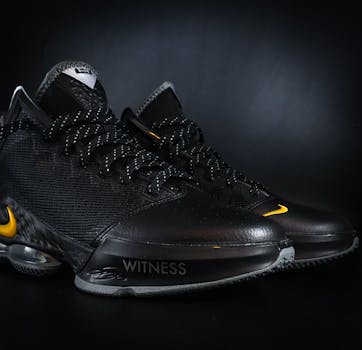
The NBA isn’t just about slam dunks, buzzer-beaters, and championship rings—it’s also about what players wear on their feet. NBA sneakers have transcended the hardwood to become global fashion icons and highly prized collectibles. From Michael Jordan’s Air Jordans revolutionizing the sneaker industry in the 1980s, to limited-edition player collaborations that sell out within minutes today, NBA sneakers have built a culture that blends sports, fashion, technology, and investment. But what is it about these shoes that captures the imagination of both fans and sneakerheads worldwide? Let’s lace up and explore the multi-faceted appeal of NBA sneakers.
The Historical Roots: From Performance Gear to Pop Culture Phenomenon
The journey of NBA sneakers began in the early days of basketball, when shoes were designed solely for function—thick soles, ankle support, and grip for the court. However, everything changed in 1984 with the launch of the Air Jordan 1 by Nike and rookie Chicago Bulls sensation Michael Jordan. The bold colorways, cutting-edge design, and NBA’s initial banning of the shoe for violating uniform codes only fueled public fascination.
By 2024, the global athletic footwear market is valued at over $130 billion, with basketball sneakers accounting for a significant share. According to Statista, Nike’s Jordan Brand alone generated approximately $6.6 billion in revenue in fiscal year 2023, illustrating how NBA sneakers have become a financial powerhouse.
.png)
Beyond the numbers, these shoes have made their mark in music videos, movies, and streetwear movements, cementing their status in pop culture. The influence of NBA sneakers is so strong that their release dates—known as “drop days”—often see crowds camping outside stores or virtual lines with millions of hopeful buyers.
Technology and Innovation: Pushing the Limits of Performance
NBA players are elite athletes, and their footwear needs to withstand immense physical demands. This necessity has driven brands to push the boundaries of innovation. Sneaker technology has evolved from simple rubber soles to advanced materials and engineering focused on performance enhancement.
For example, Nike’s Air cushioning technology, first introduced in the late 1970s, became a game-changer. Today, the Nike LeBron 20 features a combination of Zoom Air units and Cushlon foam for responsive cushioning, while Adidas’s Harden Vol. 7 utilizes Lightstrike foam for lightweight support.
Another leap forward is sustainability. In 2021, Adidas launched the Futurecraft.Loop, a fully recyclable performance sneaker. Nike’s Move to Zero campaign includes NBA sneakers made with at least 20% recycled materials by weight, reflecting growing environmental consciousness.
These technological advancements aren’t limited to the court. Many of the innovations found in NBA sneakers now influence mainstream running, training, and lifestyle shoes—proving that what starts in the NBA often sets the pace for the entire industry.
Signature Shoes and Player Branding: The Power of Personality
One of the most distinctive features of NBA sneakers is the signature shoe—models designed in collaboration with star athletes. The relationship between player and shoe brand is symbiotic: players get to express their personality and style, while brands tap into the athlete’s fan base and influence.
Michael Jordan’s partnership with Nike is the most iconic, but today’s NBA landscape is filled with stars who have their own lines. LeBron James’s signature sneakers with Nike have generated more than $1.5 billion in lifetime sales. Stephen Curry’s partnership with Under Armour has transformed the brand’s basketball division, and Giannis Antetokounmpo’s “Zoom Freak” line with Nike introduced the first-ever signature shoe for a Greek athlete.
Signature shoes often include personal touches—logos, family references, or nods to a player’s heritage. For example, the Kyrie Irving series frequently incorporates symbols from his Native American ancestry. These details transform the shoes into storytelling vehicles, making them more than just sports equipment.
Collectibility and Investment: Sneakers as Assets
What truly sets NBA sneakers apart is their role as coveted collectibles and investment vehicles. Limited releases, exclusive collaborations, and retro reissues can drive prices sky-high on the resale market. In 2021, a pair of game-worn Nike Air Ships, signed by Michael Jordan, sold for $1.47 million at auction—a record for game-worn sneakers.
According to Cowen Equity Research, the global sneaker resale market was valued at $6 billion in 2023 and is projected to top $30 billion by 2030. Platforms like StockX, GOAT, and eBay have turned sneaker trading into a thriving secondary market. Some pairs appreciate in value faster than stocks or gold.
Let’s compare some of the most valuable NBA sneakers ever sold:
| Sneaker Model | Player/Brand | Year Sold | Sale Price | Notable Fact |
|---|---|---|---|---|
| Nike Air Ship (Game Worn) | Michael Jordan/Nike | 2021 | $1.47 million | Record for game-worn sneakers |
| Nike Air Yeezy 1 (Prototype) | Kanye West/Nike | 2021 | $1.8 million | Most expensive sneaker ever sold |
| Converse Fastbreak (Game Worn, 1984 Olympics) | Michael Jordan/Converse | 2017 | $190,373 | Worn during MJ's Olympic debut |
| Air Jordan 12 "Flu Game" | Michael Jordan/Nike | 2013 | $104,765 | Famous for MJ's 'flu game' performance |
These staggering sums highlight how NBA sneakers have become much more than footwear—they’re cultural artifacts and, for some, alternative investments.
Streetwear and Self-Expression: NBA Sneakers in Everyday Life
While NBA sneakers are designed for the hardwood, their influence extends far beyond the arena. Today, sneakers are a central piece in streetwear and urban fashion. According to a 2023 report by Grand View Research, the global streetwear market is worth over $185 billion, with sneakers as the fastest-growing segment.
NBA sneakers are prized for their versatility—paired with jeans, shorts, or even suits for bold fashion statements. High-profile collaborations with designers and artists, such as the Air Jordan 1 x Dior or the Nike LeBron x John Elliott, have blurred the lines between sportswear and high fashion.
Social media has accelerated this trend. Instagram hashtags like #sneakerhead and #kicks have millions of posts, showcasing personal collections and “on-foot” shots. NBA players themselves are style icons, often photographed in exclusive or unreleased sneakers, fueling demand and setting trends.
In 2022, a survey by YouGov found that 38% of Americans aged 18-34 consider sneakers as an important part of their style identity. For many, owning a pair of NBA sneakers is both an expression of fandom and a statement of individuality.
Globalization and Cultural Impact
The appeal of NBA sneakers is truly global. The NBA claims over 2.1 billion fans worldwide, and sneakers are often a gateway for international fans to connect with their favorite players and teams. In China, for instance, the annual “Singles Day” shopping festival sees basketball sneakers among the top-selling items, with brands like Li-Ning and Anta signing NBA stars such as Dwyane Wade and Klay Thompson.
European and African markets have witnessed a surge in sneaker culture, thanks in part to the NBA’s internationalization efforts and social media. The rise of NBA stars from outside the U.S.—including Giannis Antetokounmpo (Greece), Luka Dončić (Slovenia), and Joel Embiid (Cameroon)—has made signature shoes more relatable and desirable for a global audience.
NBA sneakers have also become symbols of social movements. Limited-edition releases often support charitable causes or celebrate heritage months. For example, Nike’s “BHM” (Black History Month) collections highlight African-American culture and have raised millions for related charities.
Conclusion
NBA sneakers are much more than athletic gear. They are cultural touchstones, investment pieces, and fashion essentials. With a rich history that spans performance innovation, celebrity influence, and global trends, NBA sneakers continue to capture the imagination of fans and collectors alike. Whether you’re lacing up to play, expressing your style on the street, or hunting for that rare pair to add to your collection, NBA sneakers represent a unique blend of sport, art, and commerce that shows no sign of slowing down.