The Rise of NBA Fan Merchandise: From Simple Souvenirs to Global Phenomenon
When the National Basketball Association (NBA) was founded in 1946, few could have predicted how deeply its influence would extend beyond the court. Today, NBA fan merchandise is a multi-billion dollar industry, spanning continents and cultures, connecting fans in ways that transcend the game itself. But how did we get here? The history and development of NBA fan merchandise is a story woven from innovation, culture shifts, and the relentless passion of basketball enthusiasts worldwide.
Early Days: The Seeds of NBA Fan Merchandise
In the earliest decades of the NBA, fan merchandise was simple and scarce. During the 1950s and 1960s, the league was still establishing its identity, and official memorabilia was limited. Fans might have found basic pennants, felt banners, or game programs at arenas. Jerseys and authentic team gear were rarely available to the public. Most items were sold exclusively at games and often produced in small quantities.
During this era, the NBA was not yet the cultural juggernaut it would become. According to league archives, NBA attendance in the late 1950s averaged just 4,500 spectators per game, and national television contracts were modest. The lack of mass media exposure meant that fan merchandise remained largely regional, with little incentive for teams to invest in large-scale production or distribution.
.png)
Expansion, Media Boom, and the Birth of Licensed Products
The 1970s and 1980s brought significant changes. The NBA expanded into new cities and began securing more lucrative television deals. The rise of superstar players like Julius Erving, Magic Johnson, and Larry Bird helped put the league in the national spotlight. This increased visibility created a new demand: fans wanted more ways to support their favorite teams and players.
In 1982, the NBA took a pivotal step by partnering with companies such as Champion and Mitchell & Ness to produce officially licensed apparel. This marked the beginning of widespread availability of team-branded merchandise. Replica jerseys, hats, and T-shirts became increasingly accessible, not just in stadium shops but in national retail chains as well.
By the late 1980s, NBA merchandise had become a $100 million business. The league's marketing strategies evolved quickly, responding to the growing fan base. For example, the 1985 introduction of the Slam Dunk Contest during All-Star Weekend generated a flurry of new collectibles, including posters and commemorative items.
The Michael Jordan Effect and Globalization of NBA Merchandise
No discussion of NBA fan merchandise is complete without acknowledging the Michael Jordan era. When Jordan entered the league in 1984, the NBA's approach to branding and merchandise underwent a seismic shift. Air Jordan sneakers, launched in 1985, became an instant sensation, selling over $100 million in their first year alone.
Jordan's global appeal helped transform the NBA into an international phenomenon. The Dream Team's gold medal run at the 1992 Olympics further accelerated the league's global reach. By the mid-1990s, NBA merchandise was being sold in more than 100 countries. The league's revenue from merchandise sales reportedly topped $2 billion in 1996, according to Sports Business Journal.
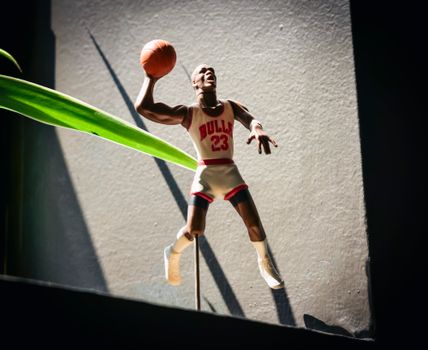
A key innovation during this period was the introduction of player-specific merchandise. Fans could now buy not just generic team gear but apparel and collectibles featuring their favorite stars. Trading cards, action figures, and even branded video games became staples of the NBA's merchandise strategy.
Technological Advancements and the E-Commerce Revolution
The late 1990s and 2000s brought the digital revolution to NBA merchandise. The launch of NBAStore.com in 1998 allowed fans from around the world to buy official gear with just a few clicks. This move was transformative, as it democratized access to merchandise that had previously been limited by geography.
Technology also enabled the customization of merchandise. Fans could now order personalized jerseys with their own names and numbers, a trend that saw exponential growth. According to the NBA, customized jersey sales increased by 35% annually between 2005 and 2010.
Limited-edition drops and collaborations with major fashion brands (such as Adidas, Nike, and BAPE) brought NBA merchandise into the worlds of fashion and streetwear. Social media platforms like Instagram and Twitter became powerful tools for promoting new releases, generating hype, and connecting with younger audiences.
Diversity and Inclusion: Representation in NBA Merchandise
As the NBA's fan base diversified, so too did its merchandise offerings. The league began to recognize and celebrate the cultural backgrounds of its players and fans. Initiatives such as the "NBA Pride" collection and special-edition jerseys honoring Black History Month, Lunar New Year, and Hispanic Heritage Month showcased the league's commitment to inclusion.
In 2020, the NBA broke new ground by allowing players to wear social justice messages on their jerseys inside the Orlando "bubble." Merchandise featuring messages like "Equality" and "Black Lives Matter" became popular among fans, reflecting a new era where sports apparel could also serve as a platform for activism.
The NBA also expanded its merchandise for women and children, offering more sizes, styles, and fits. In 2022, women's NBA merchandise sales were up 50% year-over-year, according to Fanatics, as the league responded to growing demand from female fans.
NBA Fan Merchandise in the Digital Age: Trends and Future Directions
Today, NBA fan merchandise is more diverse and accessible than ever before. The league has embraced cutting-edge technologies such as augmented reality (AR) and non-fungible tokens (NFTs). Fans can buy digital collectibles, participate in virtual jersey try-ons, and even attend online pop-up shops.
Sustainability is another emerging trend. The NBA and its apparel partners have begun producing merchandise from recycled materials, responding to increasing consumer demand for eco-friendly products. According to Nike, their NBA jerseys are now made from at least 55% recycled polyester.
To illustrate the evolution of NBA fan merchandise, here's a comparative table showing key milestones by decade:
| Decade | Key Merchandise Developments | Estimated Merchandise Revenue |
|---|---|---|
| 1950s-1960s | Pennants, banners, basic programs, limited availability | Under $10 million/year |
| 1970s | Licensed apparel introduced, expansion to retail stores | $50-$100 million/year |
| 1980s | Replica jerseys, player posters, All-Star collectibles | $100 million/year |
| 1990s | Global distribution, Air Jordan, player-branded gear | $2 billion/year |
| 2000s | E-commerce, customization, fashion collaborations | $3 billion/year |
| 2010s-2020s | Digital merchandise, inclusivity, sustainability, NFTs | $3.5+ billion/year |
Why the History of NBA Fan Merchandise Matters
Understanding the history and development of NBA fan merchandise offers more than just a trip down memory lane. It reveals how deeply the league is connected to its fans, and how both have shaped each other over time. From humble pennants to high-tech NFTs, NBA merchandise reflects broader trends in society, technology, and culture.
For fans, merchandise is more than just apparel or collectibles—it is a way to express identity, show loyalty, and connect with a global community. For the NBA, merchandise is not only a revenue stream but also a powerful brand-building tool. As the league continues to innovate, one thing remains clear: NBA fan merchandise will keep evolving, just like the game itself.